
Written by John, Energy Watch UK
Last updated: 29 July 2026
Quick Answer
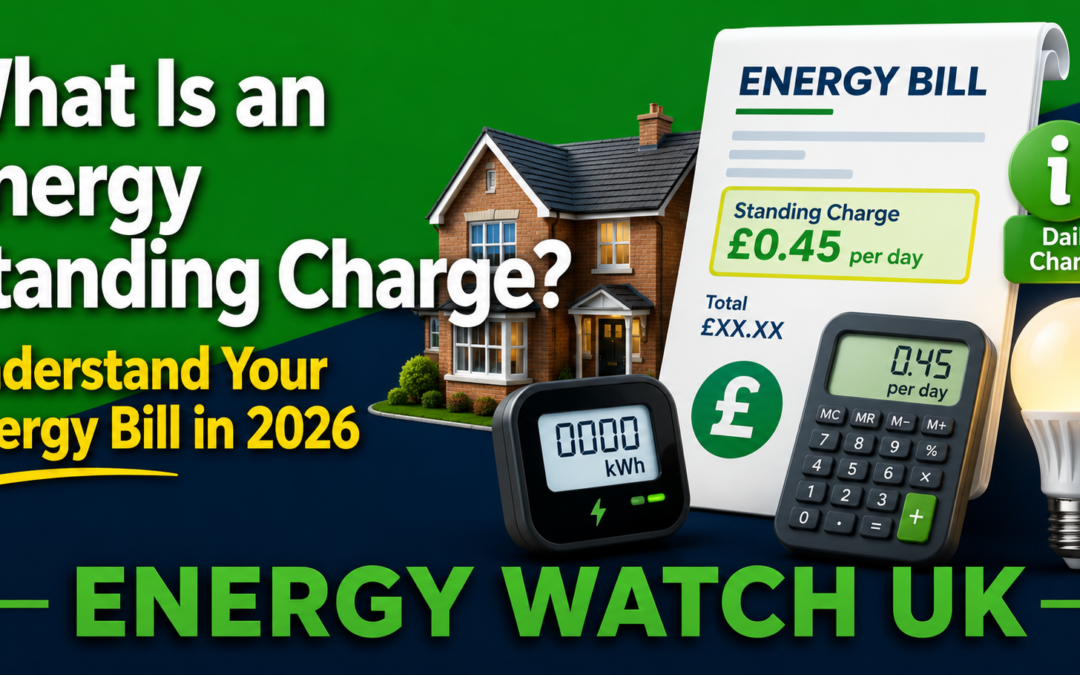
An energy standing charge is a fixed daily cost that most households pay for their electricity and gas supply, regardless of how much energy they use. It helps cover the cost of maintaining the energy network, meter services and other infrastructure. Understanding standing charges is essential when comparing energy tariffs.
When homeowners compare energy suppliers, most people immediately look at the unit rate or estimated monthly payment.
However, another important cost appears on almost every energy bill – the standing charge.
Many homeowners are unsure what this daily charge covers or why they still pay it even if they use very little energy.
At Energy Watch UK, we believe understanding your energy bill is the first step towards making informed decisions about your household energy.
What Is an Energy Standing Charge?
A standing charge is a fixed daily amount added to your energy bill.
Unlike your unit rate, which depends on how much gas or electricity you use, the standing charge is payable each day your property is connected to the energy network.
Whether you use a little energy or a lot, the standing charge normally remains the same.
What Does the Standing Charge Pay For?
Standing charges help cover a range of costs involved in delivering energy safely and reliably to your home.
These may include:
- Maintaining the gas and electricity network.
- Meter installation and maintenance.
- Customer account services.
- National infrastructure costs.
- Government energy programmes.
- Emergency response services.
The exact breakdown varies between suppliers and regions, but these charges help ensure the network continues operating efficiently.
Does Every Supplier Charge the Same Amount?
No.
Standing charges vary depending on:
- Your location.
- Your energy supplier.
- The tariff you choose.
- Whether you have gas, electricity or both.
This is one reason it’s important to compare more than just the estimated monthly payment when choosing a tariff.
Standing Charges vs Unit Rates
Your energy bill is usually made up of two main parts.
Standing Charge
A fixed daily cost that applies whether you use energy or not.
Unit Rate
The amount you pay for each unit of gas or electricity you consume.
Both should be considered when comparing tariffs.
For a complete guide, read How to Compare Energy Suppliers and Save Money in 2026.
Can You Reduce Your Standing Charge?
You usually can’t negotiate your standing charge directly with your supplier.
However, you may be able to find tariffs with different standing charges by comparing available deals.
Before switching, always compare:
- Standing charges.
- Unit rates.
- Contract length.
- Exit fees.
- Customer service.
- Renewable energy options.
Looking at the complete tariff provides a much better comparison than focusing on one figure alone.
How Does the Standing Charge Affect Low Energy Users?
If your household uses relatively little gas or electricity, the standing charge may make up a larger proportion of your total bill.
This is why comparing tariffs carefully is particularly important for homeowners with lower energy consumption.
Does the Ofgem Energy Price Cap Include Standing Charges?
Yes.
The Ofgem Energy Price Cap limits both maximum unit rates and standing charges for eligible households on default tariffs.
However, it doesn’t guarantee you’re on the cheapest tariff available.
To learn more, read:
What Is the Ofgem Price Cap in 2026?
Should You Switch Energy Supplier?
If you’re reviewing your standing charge, it may also be a good opportunity to review your entire tariff.
Before making a decision, read:
- Should You Switch Energy Supplier Now or Wait in 2026?
- Can You Change Energy Supplier During Your Contract?
Understanding your options helps you make informed decisions about your household energy.
Why Choose Energy Watch UK?
Energy Watch UK helps homeowners understand:
- Energy suppliers.
- Standing charges.
- Unit rates.
- Smart meters.
- Household tariffs.
- Energy-saving advice.
- The Ofgem Energy Price Cap.
- UK energy news.
Our goal is to provide clear, practical and independent guidance that helps homeowners make confident energy decisions.
Visit our Home page, learn more About Us, read our FAQs, explore the Areas We Cover, and see what customers say on Trustpilot.
Frequently Asked Questions
Do I pay a standing charge even if I don’t use any energy?
In most cases, yes. The standing charge is a fixed daily cost that usually applies while your property remains connected to the energy network.
Can standing charges vary between suppliers?
Yes. Standing charges can differ depending on the supplier, tariff and your location.
Is the standing charge included in the Ofgem Price Cap?
Yes. The price cap limits both standing charges and unit rates for eligible default tariffs.
Should I compare standing charges when choosing a tariff?
Absolutely. Standing charges can have a significant impact on your annual energy costs, particularly if you use relatively little energy.
Can I avoid paying a standing charge?
Most standard energy tariffs include a standing charge, although tariff structures can vary. Always check the tariff details before switching.
Further Reading
Continue learning with these Energy Watch UK guides:
- How Often Should You Compare Energy Suppliers?
- Should You Switch Energy Supplier Now or Wait in 2026?
- 0% VAT on Electricity Bills: What It Means for UK Households
- 10 Energy Saving Myths Homeowners Still Believe
About the Author
John – Your Local Energy Watch UK Expert
John is your local Energy Watch UK expert, helping homeowners understand energy suppliers, tariffs and household energy costs. Through practical, independent guidance, his goal is to help homeowners make informed energy decisions with confidence.