
Written by John, Energy Watch UK
Last updated: 23 July 2026
But what does this actually mean for your household? Will everyone benefit? Do you need to apply? And should you still compare energy suppliers?
In this guide, Energy Watch UK explains everything you need to know.
What Has Been Announced?
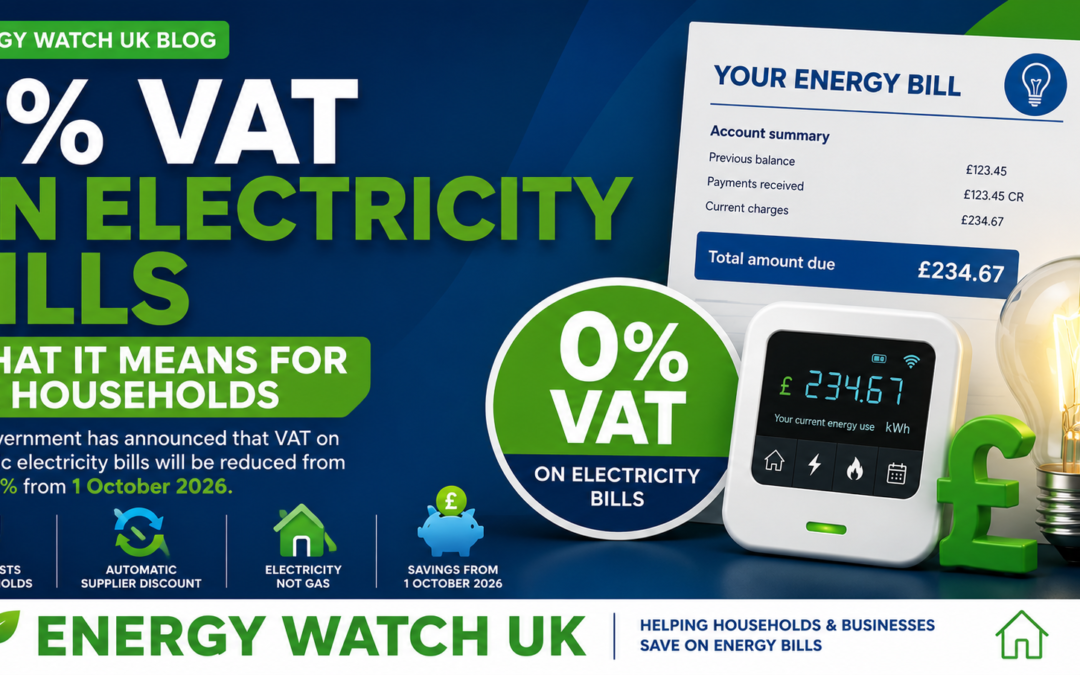
The Government has confirmed that VAT on domestic electricity bills will be removed from 1 October 2026.
Currently, households pay VAT at the reduced rate of 5% on electricity. From October, that VAT rate is due to become 0%, reducing the cost of electricity bills. The Government has said it expects suppliers to pass the reduction on to customers, including those on fixed tariffs.
Who Will Benefit?
The VAT reduction is intended to benefit households that pay for domestic electricity.
If implemented as announced, the reduction should appear automatically on eligible electricity bills through your supplier, meaning you should not need to submit an application.
Does It Apply to Gas Bills?
No.
The announcement relates to domestic electricity bills.
If you have a dual-fuel tariff, you should check with your supplier to understand exactly how the changes affect your account.
How Much Could You Save?
The amount you save will depend on:
- How much electricity your household uses.
- Your current tariff.
- Your unit rates.
Households that use more electricity are likely to see a larger cash saving than households with lower electricity consumption.
The Government has indicated the measure is expected to reduce the annual Ofgem price-cap illustration by around £45, although your own saving will depend on your circumstances.
Do You Need to Do Anything?
In most cases, no.
The Government expects suppliers to apply the VAT reduction automatically where eligible. However, it’s always worth checking your bill once the changes take effect.
Should You Still Compare Energy Tariffs?
Yes.
Although removing VAT from electricity bills is welcome news, it doesn’t necessarily mean you’re on the best tariff.
Your overall energy costs are still influenced by factors such as:
- Your unit rates.
- Standing charges.
- Your energy usage.
- Whether you’re on a fixed or standard variable tariff.
Comparing tariffs regularly remains one of the best ways to understand what options are available.
Why This Doesn’t Mean Every Bill Will Fall Dramatically
It’s important to understand that removing VAT is only one part of your total energy bill.
Wholesale energy prices, network costs, standing charges and your household’s energy consumption all continue to affect how much you pay.
That’s why reviewing your tariff regularly is still important.
Why Choose Energy Watch UK?
Energy Watch UK helps homeowners and businesses compare energy suppliers and understand their options.
Whether you’re looking to understand Government energy announcements, compare tariffs or review your current supplier, our aim is to provide clear, independent information that helps you make informed decisions.
Frequently Asked Questions
When does the 0% VAT rate start?
The Government has announced that the change is due to begin on 1 October 2026.
Do I need to apply?
No. The Government expects suppliers to apply the VAT reduction automatically for eligible customers.
Does this include gas bills?
The announcement is for domestic electricity bills rather than household gas bills.
Will everyone save the same amount?
No. Savings depend on electricity usage and your tariff.
Should I still compare energy suppliers?
Yes. Even with lower VAT on electricity, comparing tariffs can help you understand whether there’s a better option for your home.
Key Takeaways
- VAT on domestic electricity bills is due to fall from 5% to 0% from 1 October 2026.
- The change is expected to be applied automatically by suppliers.
- The announcement relates to electricity rather than household gas bills.
- The amount you save depends on your electricity usage.
- Comparing energy tariffs remains worthwhile.
Related Energy Guides
You may also find these articles helpful:
- What Is a Standard Variable Energy Tariff?
- How to Compare Energy Suppliers and Save Money in 2026
- What Is the Ofgem Price Cap in 2026?
Useful Links
About the Author
John – Your Local Energy Expert
John writes practical energy guides for Energy Watch UK, helping homeowners and businesses understand energy tariffs, compare suppliers and keep up to date with important changes affecting UK energy bills.
Ready to Compare Your Energy Tariff?
Whether you’re reviewing your current tariff or simply want to understand your options, Energy Watch UK can help.
We help homeowners and businesses compare energy suppliers across the UK with a free, no-obligation energy comparison.